

The best time to plant strawberries depends less on the calendar than on your local climate, soil temperature, and the type of strawberry you choose. Gardeners in cool northern zones often plant in early spring, while growers in hot southern zones do better with fall planting. Get the timing wrong and you may lose a season to weak roots, poor fruit set, or heat stress. This guide breaks the timing down by climate zone, so you can match planting to the conditions your plants will actually face. For broader seasonal planning, the BeGardenly Gardening Hub collects related growing guides in one place.
Quick answer: Plant strawberries in early spring (March to May) in cool and cold climates, and in fall (September to November) in hot climates with mild winters. Aim for soil that stays above roughly 40°F (4°C) and give plants four to six weeks of mild weather before any hard heat or freeze. June-bearing types go in early spring almost everywhere.
What is best time to plant strawberries?
The best time to plant strawberries is the window when soil is warm enough for roots to grow but the weather is not yet harsh. Strawberries are shallow-rooted perennials. They establish slowly, and they fruit best after a full season of root and crown growth. That makes the planting date a setup decision, not just a scheduling detail.
Two systems shape the answer. June-bearing strawberries produce one large crop in late spring or early summer. Everbearing and day-neutral types fruit in flushes across the season. Most garden centers sell bare-root crowns and potted starts, and both need the same basic conditions at planting: moist, well-drained soil and moderate temperatures.
Climate zone changes the timing because of how summer and winter treat the plants:
- Cool climates (roughly USDA zones 3–6): Winters are cold and summers are short. Spring planting gives roots the longest mild stretch before winter.
- Mild climates (roughly zones 7–8): Both spring and fall can work. Fall planting lets roots settle before summer heat.
- Hot climates (roughly zones 9–11): Summers are punishing and winters are mild. Fall planting is usually the safer choice.
Soil temperature matters more than air temperature. Roots barely grow in cold ground, so planting into soil below about 40°F (4°C) usually stalls the plant. Potted starts tolerate cooler soil than bare-root crowns. If you are unsure, push a soil thermometer in at midday for a few days.
A simple rule helps: plant when you would comfortably work in a light jacket, and when the ground crumbles rather than clumps. That window usually falls in spring for cold zones and in fall for hot ones.
Takeaway: Match planting to your zone’s temperature pattern and to the strawberry type, not to a fixed date on the calendar.
Why best time to plant strawberries matters
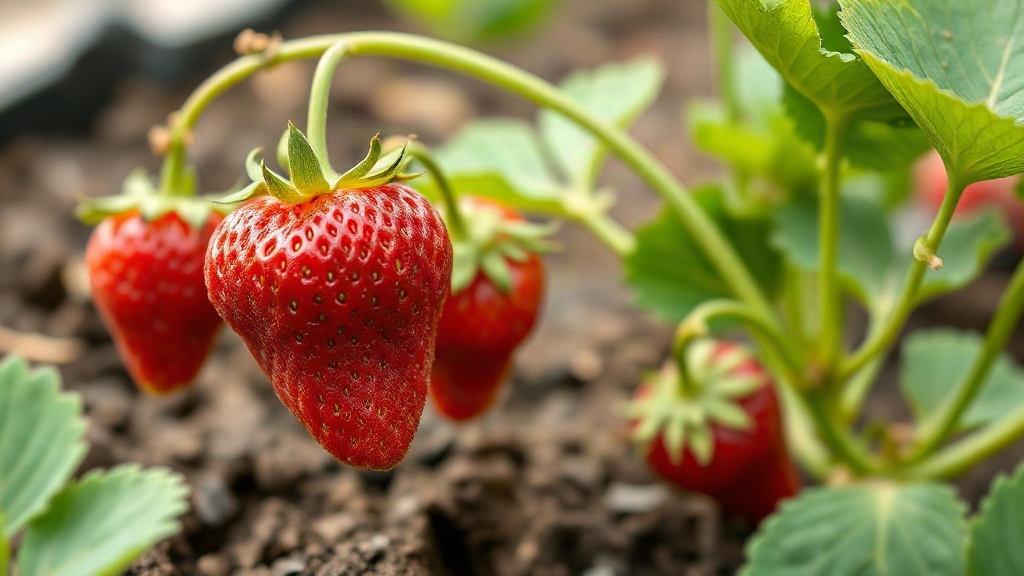
Timing affects survival, yield, and how much work the first year demands. A crown planted at the right moment sends out roots quickly and builds a strong crown before it faces heat or frost. A crown planted too early sits in cold, wet soil and often rots. One planted too late may dry out before it ever anchors.
The consequences show up in specific ways:
- Root establishment. Strawberries have shallow roots that dry fast. Plants need several weeks of moderate weather to knit into the soil.
- Fruit production. June-bearing plants set buds in response to day length and temperature. A stressed plant carries fewer flowers the following season.
- Winter hardiness. Plants need time to harden off before freezing weather. Late fall planting in cold zones leaves them vulnerable.
- Disease pressure. Cold, saturated spring soil favors root rots. Hot, humid planting conditions invite leaf disease.
There is also a money angle. Bare-root crowns are inexpensive, but they demand good timing. Potted starts cost more and forgive more, because they arrive with roots already growing. If your window is tight, buy potted starts and plant them promptly.
A June-bearing strawberry planted in fall in a cold climate may not have enough root growth before winter. The same plant set out in early spring has a full season to prepare. Variety choice and planting date should always be decided as a pair.
Takeaway: The right planting window protects roots, supports fruit set, and reduces first-year losses.
Best practices
Start with the plant type, then set the date around it. June-bearing strawberries are best planted in early spring in nearly every zone. They need the full growing season to build crowns and set the next year’s buds. Everbearing and day-neutral types are more flexible, and in warm climates they often perform well from fall planting.
Prepare the bed before you buy plants. Strawberries want full sun and loose, well-drained soil with a pH around 5.5 to 6.5. Work in compost, and raise the bed if drainage is poor.
Plant at the right depth. The crown, where leaves emerge, should sit at soil level. Bury it and the plant rots; leave it too high and roots dry out. Space plants about 12 to 18 inches apart in rows 3 to 4 feet apart, so air moves and runners have room.
Water deeply at planting and keep the soil evenly moist for the first two to three weeks. Avoid heavy fertilizer at planting; too much nitrogen pushes soft leaves instead of roots.
Comparison: spring vs. fall planting
| Factor | Spring planting | Fall planting |
|---|---|---|
| Best for | Cold and cool zones | Hot and mild-winter zones |
| Root growth window | Long, through summer | Short, before winter |
| Heat risk | Low in cool zones | Low, as weather cools |
| Main risk | Late frost, wet soil | Early freeze, dry spells |
Notice the trade-off. Spring gives the longest establishment window, but it exposes young plants to summer heat in warm regions. Fall protects plants from heat but shortens the time before winter.
Strawberry beds also need renewal every few years. Older plants lose vigor, and runners crowd the rows. If you plan to expand your patch, dividing strawberry plants explains how to split and reset healthy crowns for a fresh, productive bed.
A ten-day forecast tells you more than a zone chart. Plant when the outlook shows mild days and no hard freeze or heat wave in sight.
Takeaway: Choose the variety first, prepare the bed, plant at the correct depth, and let the local forecast fine-tune the date.
Common mistakes to avoid
The most frequent error is planting by the calendar alone. Two gardens in the same zone can differ by weeks because of elevation, coastal fog, or a sheltered wall. Local soil temperature and last-frost dates are better guides than a generic chart.
Other mistakes show up again and again:
- Planting too deep. A buried crown is a dead plant. Set it at soil level and check after watering settles the soil.
- Skipping soil prep. Strawberries in heavy, compacted clay struggle. Improve drainage before planting.
- Planting in summer heat. In hot zones, midsummer planting often fails. Wait for cooler fall weather.
- Ignoring winter protection. In cold zones, mulch after the ground freezes to buffer roots against heaving.
- Crowding plants. Tight spacing invites disease and makes picking harder.
- Letting all runners root. Too many daughter plants compete with the mother and cut fruit size. Remove extra runners.
A late spring frost can damage open flowers and new growth. Keep row cover handy if a cold snap follows your planting date.
Takeaway: Most failures trace back to depth, drainage, and timing against local weather rather than zone averages.
FAQ
Can I plant strawberries in summer?
It is possible in cool climates with steady watering and shade for the first week. In hot climates, summer planting usually fails because soil and air are too warm for young roots. Wait for fall instead.
How late in fall can I plant strawberries?
Plant at least four to six weeks before your first expected freeze. That gives roots time to settle. In mild-winter zones, planting into November can still work if the soil stays workable.
Do bare-root and potted strawberries need different timing?
Bare-root crowns are less forgiving and do best in early spring. Potted starts have active roots, so they tolerate a slightly wider window, including fall in warm regions.
What soil temperature should I wait for?
Aim for soil above roughly 40°F (4°C) for potted plants, and closer to 50°F (10°C) for bare-root crowns. Cold soil slows root growth and raises rot risk.
Should I plant strawberries in their first year for fruit?
Pinch off flowers on June-bearing plants in the first season. This sends energy into roots and crowns. You trade a small first crop for a stronger plant and a bigger harvest next year.
Conclusion
Timing strawberries comes down to matching the plant to your climate. Cool zones favor early spring, mild zones can use spring or fall, and hot zones do best with fall planting. June-bearing types almost always go in during early spring, while everbearing and day-neutral types offer more flexibility. Depth, drainage, and local weather forecasts matter as much as the date on the calendar. Check your zone, test your soil temperature, and pick your planting window this week so roots have time to settle before the season turns.