

How to Attract Bees to Your Garden Using Native Plants
Many gardens look healthy but still fail to attract bees. Flowers bloom, leaves grow fast, and the space appears alive. Yet pollinators rarely visit. This happens because most gardens rely on decorative plants that provide little nectar or pollen.
Without bees, vegetable yields drop. Fruit trees produce fewer harvests. Biodiversity weakens. Over time, even strong plants struggle because pollination declines.
The solution is simple and proven. Replace non-native ornamentals with region-appropriate native flowering plants. Native species produce reliable nectar, bloom at the right times, and support local bee populations naturally.
This guide explains exactly how to design a bee-friendly garden using native plants step by step.
Why should you attract bees to your garden?
Snippet Answer: Bees improve garden productivity by pollinating vegetables, fruits, and flowers. Native bees increase biodiversity, strengthen plant resilience, and support ecosystem balance. Planting nectar-rich native flowers provides food across seasons, ensuring healthy pollinator populations and higher yields in home gardens.
Bees are responsible for pollinating nearly one-third of the crops humans consume. Without them, food production drops sharply. Even small home gardens depend on bee activity for tomatoes, cucumbers, pumpkins, berries, and herbs.
Native bees are especially important because they are adapted to local weather, soil, and plant cycles. Unlike imported honeybees, they require less maintenance and survive without human intervention.
Gardens without pollinators often show signs such as:
- Low fruit production
- Flowers dropping early
- Misshaped vegetables
- Reduced seed formation
Encouraging bees increases crop reliability. It also improves plant genetics by supporting cross-pollination. Over time, gardens become more self-sustaining.
Native plant gardens also support butterflies, hoverflies, and beneficial insects that reduce pests naturally.
Which native plants attract the most bees?
Answer Block: Native flowering plants attract bees because they provide compatible nectar, pollen, and bloom timing. Species such as wildflowers, basil flowers, sunflowers, mustard flowers, and native shrubs support local pollinators better than ornamental hybrids and imported garden varieties.
Bees prefer plants they evolved alongside. These plants produce nectar with the right sugar concentration and pollen that matches their nutritional needs.
Choose plants that bloom in different seasons. This ensures bees always find food.
Examples of strong bee-supporting native plants include:
- Sunflower
- Mustard flower
- Sesame flower
- Holy basil (Tulsi)
- Coriander flowers
- Pumpkin blossoms
- Native hibiscus
Vegetable flowers are especially valuable because they serve both pollination and harvest goals.
A mix of herbs, vegetables, shrubs, and wildflowers creates a layered nectar supply. This supports different bee species with different feeding habits.
How do native plants support bee populations better than ornamental plants?
Answer Block: Native plants support bees more effectively because they produce accessible nectar and pollen. Ornamental hybrids often lack nectar, bloom outside natural cycles, or have closed flower shapes that prevent bees from feeding efficiently.
Many decorative flowers are bred for appearance rather than ecological value. Double-petaled flowers often hide pollen completely. Bright colors alone do not attract bees if nectar is missing.
Native species provide:
- Reliable pollen nutrition
- Correct bloom timing
- Accessible flower structure
- Habitat compatibility
Local bees recognize native flower signals such as scent and ultraviolet patterns. These signals guide them directly to nectar sources.
Another advantage is climate tolerance. Native plants survive drought, humidity, and seasonal rainfall without intensive care. This ensures stable food supply for pollinators year after year.
When should you plant native flowers to attract bees year-round?
Answer Block: Plant native flowers in seasonal stages so blooms appear continuously from early spring through late autumn. Year-round nectar availability keeps bees active, improves colony survival, and increases pollination efficiency across garden crops.
Continuous bloom cycles are essential for supporting pollinators. If nectar disappears for even a few weeks, bees leave the area.
Plan your garden using staggered flowering groups:
- Early bloomers: coriander, mustard
- Mid-season bloomers: sunflower, basil
- Late bloomers: pumpkin, sesame
This rotation ensures bees remain nearby throughout the growing season.
Plant diversity also supports different bee species. Some bees emerge early in the year. Others appear during warmer months. Matching plant timing with bee activity creates a stable pollination network.
How can you design a bee-friendly garden layout using native plants?
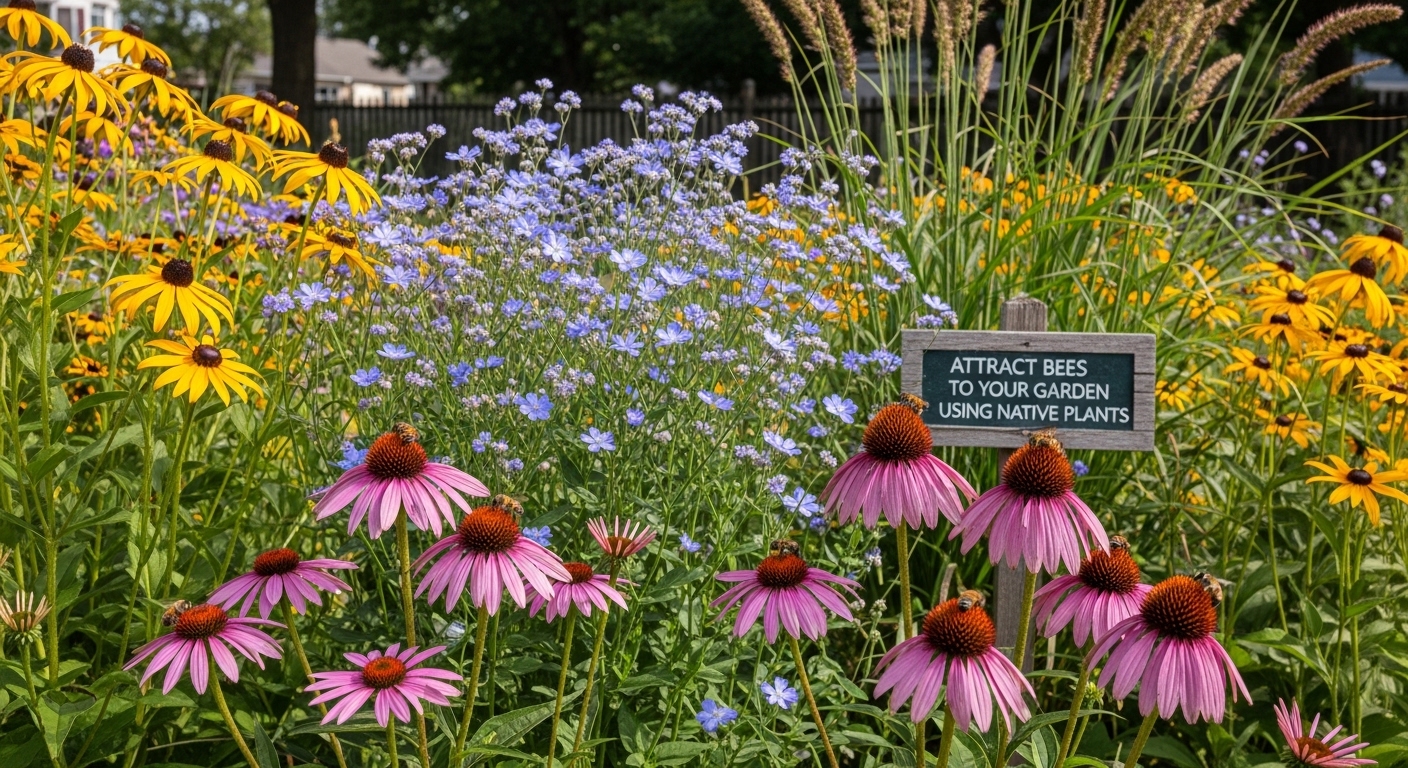
Answer Block: A bee-friendly garden layout groups native flowering plants in clusters, provides shallow water sources, reduces pesticide exposure, and includes shelter areas. Dense planting improves visibility for bees and increases pollination efficiency across the garden.
Plant clustering is more effective than scattering flowers randomly. Bees prefer dense nectar zones because they reduce flight energy.
Follow these layout strategies:
- Plant flowers in groups of 5–7
- Keep bloom heights layered
- Add herbs near vegetables
- Maintain open landing space
Include shallow water trays with stones for safe landing. Bees require hydration during warm weather.
Leave some undisturbed soil patches. Many native bees nest underground. Removing all bare soil reduces habitat availability.
Combining shelter, nectar, and water creates a complete pollinator environment.
Which garden practices discourage bees and should be avoided?
Answer Block: Avoid synthetic pesticides, excessive lawn areas, double-petal ornamental flowers, and over-pruning flowering herbs. These practices reduce nectar availability and destroy habitats essential for sustaining native bee populations.
Chemical sprays are the biggest threat to pollinators. Even low-dose exposure affects bee navigation and memory.
Common mistakes gardeners make include:
- Using insecticides during flowering season
- Removing herb flowers too early
- Maintaining large grass lawns
- Planting only decorative hybrids
Switching to organic pest control protects beneficial insects while maintaining crop health.
Allow herbs like basil and coriander to flower before harvesting completely. These flowers provide high-value nectar.
What are the best native plant combinations for maximum pollination?
Answer Block: Combining native herbs, vegetables, shrubs, and wildflowers creates layered nectar availability. This diversity supports multiple bee species and increases pollination efficiency across fruiting plants in small and large gardens.
Mixed planting improves resilience and productivity. Different flower shapes attract different bee species.
| Plant Type | Example Plants | Pollination Benefit |
|---|---|---|
| Herbs | Basil, coriander, mint | High nectar production |
| Vegetables | Pumpkin, cucumber, beans | Boosts crop yield |
| Wildflowers | Sunflower, mustard | Seasonal pollen supply |
| Shrubs | Native hibiscus | Long bloom duration |
Combining these categories ensures constant nectar flow. This keeps pollinators returning daily.
How long does it take to see bees after planting native flowers?
Answer Block: Bees usually begin visiting native flowers within two to six weeks after blooming starts. Gardens with diverse plant species and pesticide-free environments attract pollinators faster and maintain stable bee populations throughout the season.
Early visitors are often solitary bees. These species respond quickly to new nectar sources.
Within one growing season, gardeners typically observe:
- Increased flower visits
- Higher vegetable yield
- Improved fruit formation
- Greater biodiversity
Consistency matters more than speed. Maintaining flowering plants across seasons ensures long-term pollinator presence.
Conclusion
Attracting bees to your garden does not require expensive tools or complex landscaping. The most effective strategy is planting native flowers that match local pollinator needs.
Native plants provide nectar at the right time, support biodiversity naturally, and improve crop productivity without chemicals. Even a small garden can become a pollinator habitat with clustered planting, seasonal bloom planning, and pesticide-free maintenance.
Start by replacing just three ornamental plants with native flowering herbs or vegetables. Then expand gradually each season. Within months, bee activity increases and garden yields improve.
Build a garden that supports pollinators today, and it will support your harvest for years to come.
Frequently Asked Questions
Do bees prefer native plants over hybrid flowers?
Yes. Native plants provide accessible nectar and pollen that match local bee feeding behavior. Hybrid flowers often lack nectar or have complex petals that prevent bees from reaching food sources efficiently.
Can small balcony gardens attract bees?
Yes. Even container gardens with basil, coriander, and sunflower can attract bees if flowers are allowed to bloom fully and pesticides are avoided.
How many native plants are needed to attract bees?
Planting five to seven flowering species is enough to begin attracting bees. Increasing plant diversity improves pollination stability and supports more bee species.
Do bees need water sources in gardens?
Yes. Bees require shallow water for hydration. Providing a tray with stones helps them land safely and remain active during warm weather.
Are honeybees the only important pollinators?
No. Solitary bees, carpenter bees, and stingless bees also contribute significantly to pollination and often outperform honeybees in small gardens.
Is pesticide-free gardening necessary for attracting bees?
Yes. Even mild insecticides disrupt bee navigation and feeding behavior. Organic pest control methods protect pollinator populations effectively.
Which flower colors attract bees most?
Bees prefer blue, yellow, white, and violet flowers. These colors are easier for bees to detect using ultraviolet vision patterns.
Read More Also: How to Restore Soil Health for Sustainable Farming
Learn More: How to Repot an Aloe Plant: A Comprehensive Guide